






China's First Zero-Carbon Sea-River Intermodal Hub Route Opens
Source:CNSS
2026-07-03
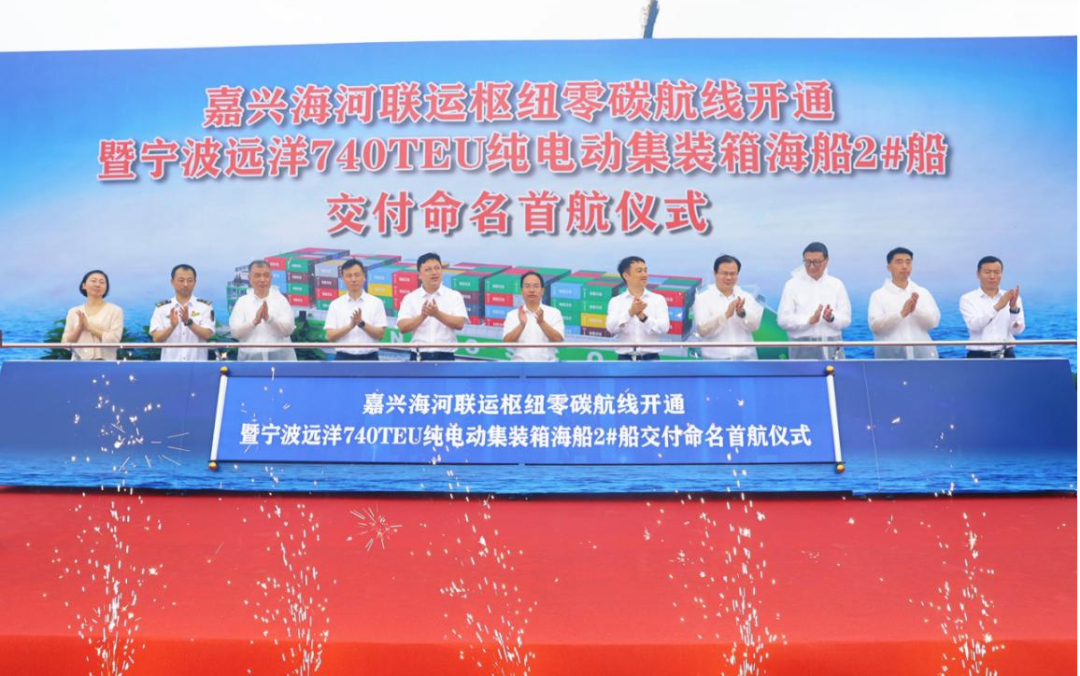
On June 30, the Ning Yuan Dian Peng, fully loaded with containers, set sail from the Dushan Port Area of Jiaxing Port bound for the Jintang Port Area of Ningbo-Zhoushan Port, officially launching China's first zero-carbon sea-river intermodal demonstration route and marking the entry of domestic sea-river intermodal transport into the zero-carbon era.
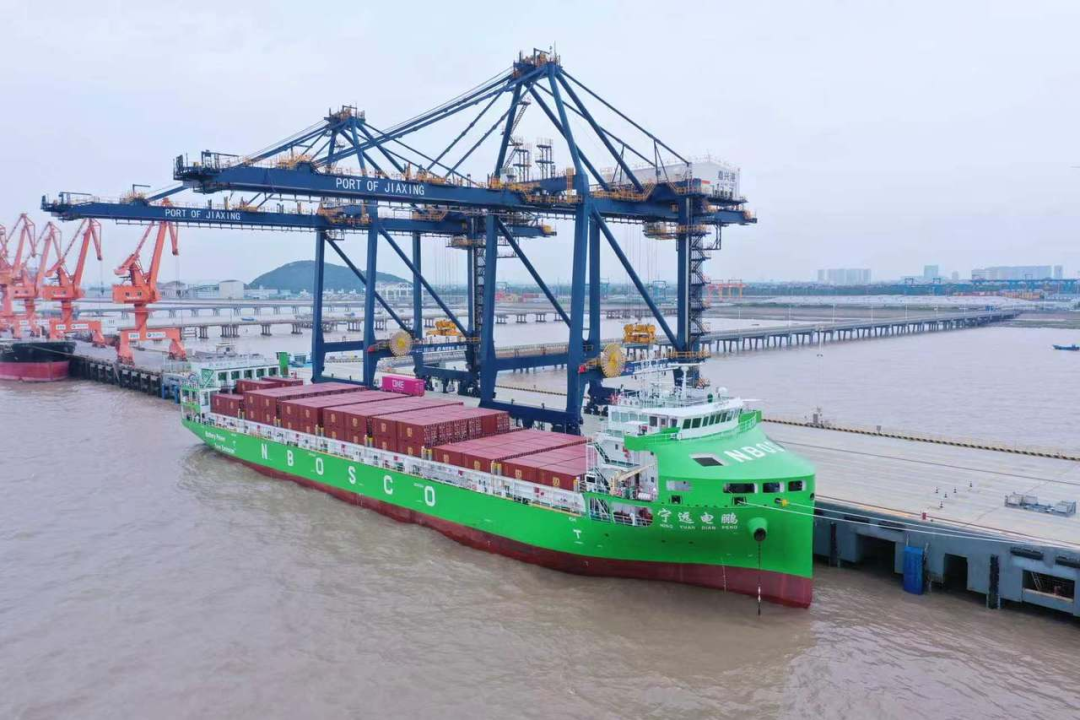
This route, spearheaded by Zhejiang Provincial Seaport Investment & Operation Group and Ningbo-Zhoushan Port Group, centres on building a full-chain zero-carbon transport system comprising "pure electric container trucks + pure electric inland waterway vessels + pure electric seagoing ships." Complete knockdown kits of automobiles from Geely's Changxing base became the route's first "zero-carbon passengers": the cargo travelled from Changxing Port to Jiaxing Port aboard a 64-TEU pure electric inland container vessel, before transferring to the 10,000-tonne-class pure electric container vessel Ning Yuan Dian Peng for the sea leg—a total journey of roughly 350 kilometres, truly achieving zero fuel consumption and zero exhaust emissions.
The Ning Yuan Dian Peng, commissioned by Ningbo Ocean Shipping, is a sister vessel to the Ning Yuan Dian Kun. The vessel has an overall length of 127.8 metres and a beam of 21.6 metres, with a certified container capacity of 742 TEU. It uses ten standardised containerised battery packs as its power core, with a total stored energy of approximately 20,000 kWh. It is projected to save roughly 800 tonnes of fuel and reduce carbon dioxide emissions by over 2,000 tonnes annually.
Earlier, the Ning Yuan Dian Kun was deployed on the "Ningbo–Jiaxing" route in mid-April, saving 67 tonnes of fuel and reducing CO₂ emissions by approximately 168 tonnes in its first month of operation.
It is estimated that each individual container can reduce carbon emissions by roughly 60 kg across the entire journey, with the route achieving a cumulative annual CO₂ reduction of approximately 4,800 tonnes and saving over RMB 7.4 million in logistics costs. Cargo simultaneously gains a dedicated "low-carbon identity," enhancing industrial added value and opening up a new low-cost, low-emission waterway logistics pathway for foreign trade enterprises in the Yangtze River Delta.
The successful implementation of this route provides a valuable "Zhejiang blueprint" for the electrification and zero-carbon development of coastal and inland waterway shipping nationwide. It is expected to accelerate the green transformation of inland and coastal shipping and support the faster realisation of China's "dual carbon" goals within the water transport sector.
Hot News