






France Deploys Two Minehunters; UK and France to Cooperate with Oman in Joint Escort Mission for the Strait of Hormuz
Source:CNSS
2026-07-06
French President Emmanuel Macron announced on July 3 that France has deployed mine countermeasures forces to the Middle East, including two minehunters supported by two frigates and a maritime patrol aircraft. These forces stand ready to work with partner nations to promote the full restoration of maritime traffic through the Strait of Hormuz and safeguard the safety of navigation.
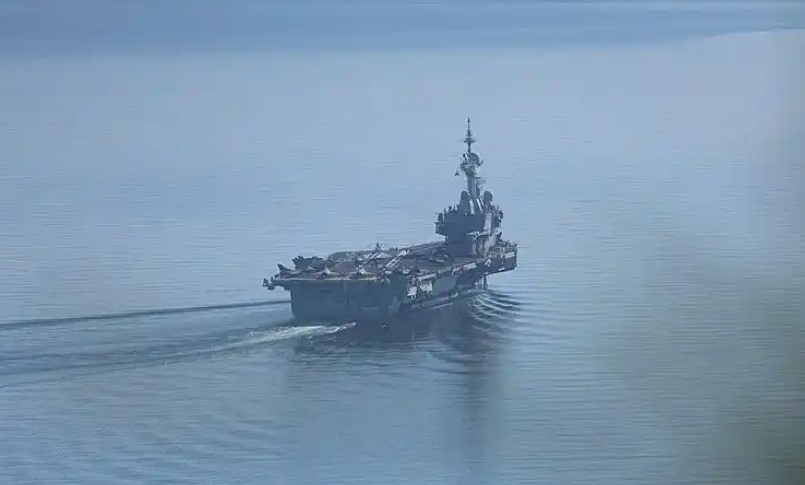
Meanwhile, the French aircraft carrier Charles de Gaulle will return to its home port of Toulon. Mr. Macron stated that this adjustment is based on positive developments in the regional situation and evolving operational requirements. He noted that the memorandum of understanding signed by the United States and Iran on June 17 represents significant progress in promoting regional stability, reaffirming freedom of navigation in the Strait of Hormuz. Following "constructive exchanges" with Sultan Haitham bin Tariq of Oman, he decided to adapt France's military posture in the region accordingly.
Trilateral Cooperation Among the UK, France, and Oman
On July 3, British Prime Minister Keir Starmer and French President Emmanuel Macron issued a joint statement announcing that Oman has agreed to cooperate with the United Kingdom and France in ensuring the safety of navigation within its sovereign waters. The statement described the Strait of Hormuz as "the lifeblood of the global economy," and stated that restoring safe passage for all nations' vessels is "a matter of global concern."
The statement further declared that the UK and France "stand ready to deploy a broader multinational military mission to support freedom of navigation in the Strait of Hormuz." The two countries had already proposed a defensive multinational escort mission in the Strait of Hormuz back in April this year, and have since deployed military forces to Middle Eastern waters.
Strong Opposition from Iran
Iran has expressed strong opposition to the involvement of the UK and France in the security affairs of the Strait of Hormuz. In a response posted on social media on July 4, Iranian Deputy Foreign Minister Gharibabadi stated that the Strait of Hormuz is "not a venue for military displays by extra-regional countries."
Mr. Gharibabadi emphasised that Iran is "the responsible authority and guarantor of the strait's security," warning against any military operations in this sensitive waterway. He asserted that the security of the strait is the joint responsibility of Iran and Oman, and opposed any military action that could affect the safety of the waterway. Iran has previously made clear that the operations of French and British warships in the Strait of Hormuz would face a "firm and immediate" response from the Iranian Armed Forces.
Background: Mine Threat and Disrupted Shipping Lanes
The deployment takes place against the backdrop of a persistent and severe mine threat in the Strait of Hormuz. A large number of floating mines are reported to be present in the main shipping channel, and recent days have seen frequent attacks on vessels transiting the area. The International Maritime Organization estimates that there are approximately 80 mines in the Strait of Hormuz shipping lane, and clearance operations could last for several weeks.
Due to the mine risk in the main channel, commercial vessels have been forced to use alternative routes—a southern lane close to Oman and a northern lane closer to Iran. The Islamic Revolutionary Guard Corps has demanded that all vessels transiting the Strait of Hormuz obtain prior clearance. According to the latest shipping tracking data, eight vessels attempting to traverse the waterway along the Omani coast were turned back by Iran on July 4.
The Strait of Hormuz handles the transport of approximately 20% of the world's oil and gas supplies, making it one of the most critical shipping chokepoints globally. Iran has tightened its grip over the strait since February 28 this year, when it banned safe passage for vessels linked to Israel and the United States in retaliation for joint strikes on its territory. Although some shipping has resumed in recent days, traffic remains well below pre-conflict levels.
Hot News