






This Fleet Is the Worst Performer in the Shipping Industry
Source:CNSS
2026-07-01
The global livestock carrier fleet is in a state of chronic regulatory failure, with old, poorly maintained vessels ranking as the worst-performing ship category in Port State Control inspections for at least six consecutive years. This finding comes from a comprehensive 410-page report jointly released by Robin des Bois, the Animal Welfare Foundation, and Tierschutzbund Zürich.
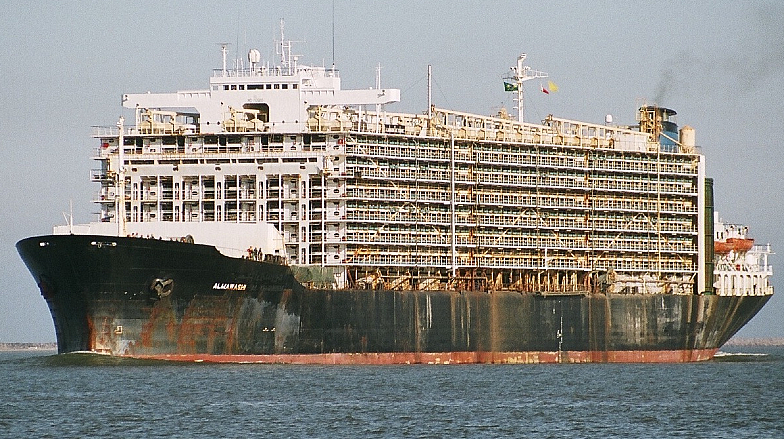
The report, The Global Livestock Fleet, is the third in the series and has progressively expanded its scope from EU-flagged vessels to encompass all vessels worldwide. According to the report, of the 159 registered livestock carriers globally, 134 (84%) were originally built for other purposes and were converted into livestock carriers decades ago. These vessels have an average age of 45 years and, despite transporting tens of millions of live animals annually, suffer from persistently high rates of technical deficiencies and port detentions. Each converted vessel in service has accumulated an average of 242 recorded deficiencies and been detained four times over its operational lifetime.
The 53-year-old livestock carrier Spiridon II serves as a harrowing example of the risks within the industry. The vessel loaded nearly 3,000 cattle in Uruguay bound for Turkey, yet encountered technical problems and delays even before departure. During the voyage, the cattle were reported to have survived in extreme conditions, with calves even being born on board. Upon arrival, the vessel was refused permission to discharge its cargo, leaving the animals stranded on board; ultimately, hundreds of cattle perished.
Researchers and animal welfare advocates note that this is not an isolated incident, but rather a systemic problem stemming from the industry's ageing infrastructure and regulatory gaps. The report repeatedly underscores the sector's frequent safety concerns and critically inadequate oversight.
In its 2024 Annual Report, the Paris MoU on Port State Control identified livestock carriers as the worst-performing ship type, with an inspection deficiency rate of 88% and a detention rate of 15%—nearly four times the average detention rate across all ship types (4%).
The regulatory status of the fleet is even more alarming. More than half of the 159 livestock carriers fly flags that are on the Paris MoU Black List. The proportion of converted vessels flying a black-listed flag reaches 54.6%, compared with just 8% for purpose-built livestock carriers. Furthermore, only 22.3% of converted vessels are classed by members of the International Association of Classification Societies, whereas the figure for purpose-built vessels stands at 72%.
Yet, far from slowing, the conversion trend is accelerating. Between January 2024 and March 2026, ten older vessels were converted into livestock carriers, compared with a combined total of just three during 2022 and 2023. Since 1975, at least ten major casualties have been recorded in the seaborne livestock trade, resulting in the deaths of 88 crew members and at least 193,000 head of livestock. Among these, the sinking of the Gulf Livestock 1 in Japanese waters in 2020, which claimed the lives of 41 crew members and 5,867 head of livestock, stands as the industry's deadliest accident in recent years.
Hot News