






Large Vessels Calling at UK Ports Required to Pay "Carbon Tax" from Today
Source:CNSS
2026-07-02
Starting today, the UK has expanded its domestic Emissions Trading Scheme to cover the maritime sector, formally incorporating cargo and passenger ships of 5,000 gross tonnage and above into the country's carbon market. Experts caution that all vessels exceeding 5,000 GT calling at UK ports are subject to the relevant regulations, irrespective of their flag state or the nationality of their owner.
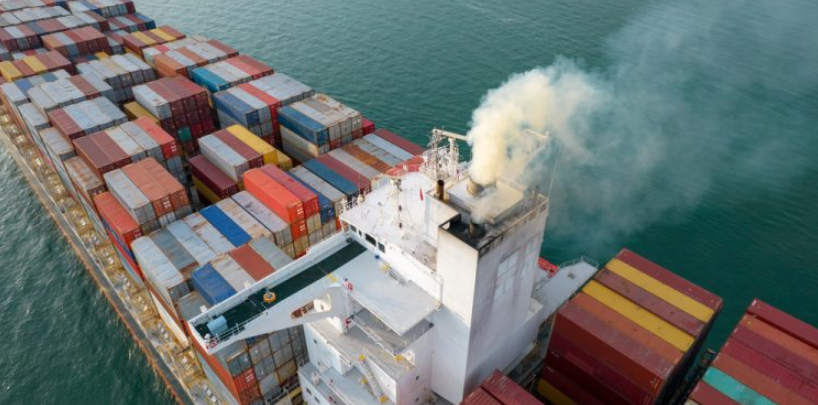
The UK ETS now applies to voyages between UK ports and to port activities within UK ports of call, including cargo operations, anchorage, and berthing shifts. Operators are required to monitor emissions of carbon dioxide, methane, and nitrous oxide, and to surrender an amount of UK allowances equivalent to their verified emissions. The mechanism operates independently of the EU Emissions Trading System, meaning eligible vessels may be subject to both systems depending on their routing.
Under the regulations, liability rests by default with the registered shipowner. However, this liability can be transferred to the International Safety Management Company through a legally binding written agreement, provided such an agreement covers matters relating to the operation of the vessel, ISM Code compliance, and UK ETS obligations. Should no valid transfer of responsibility be in place, the registered owner remains liable.
One of the primary requirements is that vessel operators must submit an Emissions Monitoring Plan to the regulator. An EMP is submitted on a per-company basis and includes vessel lists, vessel specifications, emission sources, and related data. The plan does not need to be assessed by a verifier, but must be approved by the regulator.
Operators are required to open a Maritime Operator Account with the UK's "Manage your Emissions Trading Scheme" reporting service and must apply for an EMP within 42 days of their first qualifying maritime activity under the UK ETS. The Annual Emissions Report must be independently verified and submitted by 31 March of the year following the end of the carbon market year.
Operators are required to submit their AER by 31 March each year and surrender the corresponding quantity of allowances by 30 April. For the first scheme year—running from 1 July to 31 December 2026—the deadline for surrendering allowances is 30 April 2028. The standard reporting period runs from 1 January to 31 December, while for 2026, only the second half of the year is reportable. Offshore vessels may benefit from an exemption until the end of 2026, with mandatory compliance commencing on 1 January 2027.
Exemptions apply to vessels engaged in non-commercial government maritime activities, fishing and fish processing vessels, and vessels operating Scottish ferry services. Unlike the UK MRV framework, voyages between UK ports and ports outside the European Economic Area are not covered by the UK ETS, as they are not considered domestic voyages. Additionally, voyages between Northern Ireland and Great Britain are eligible for a 50% reduction in UK ETS allowance surrender obligations.
This move adds a further layer of pressure to the shipping industry's mounting carbon compliance burden, forcing owners operating around the UK to align monitoring, verification, and allowance procurement with existing requirements under the EU and the International Maritime Organization.
Hot News